
Storm Cleanup Dumpster Rental in Chicago
From spring hail and wind to genuine winter cold, Chicago's weather shapes storm cleanup timing more than people expect. Here's what to plan for.
Chicago dumpster guide
Shingles are heavier than they look, and Chicago roofs often carry more than one layer. Here's how to size the dumpster correctly and time the job.

Roofing is one of the most weight-driven dumpster jobs there is. Unlike a general cleanout where volume is usually the limiting factor, a roof tear-off is almost always limited by weight first, because asphalt shingles are dense and a “full-looking” pile of tear-off debris can weigh far more than it appears to. Getting the size and weight allowance right up front saves a headache on tear-off day, when the crew needs a container ready to go and doesn't have time to wait on a size change.
Roofing is measured in “squares” — one square covers 100 square feet of roof. Standard three-tab asphalt shingles typically run somewhere around 200 to 300 pounds per square, while heavier architectural or dimensional shingles can run higher. That means an average single-family home with roughly 20 to 30 squares of roofing can generate several tons of tear-off debris from the shingles alone, before accounting for old underlayment, flashing, and any decking that needs to be replaced. This is exactly why a roofing job that looks modest in square footage can still need a substantial weight allowance — the container may not look full, but it can hit its tonnage limit well before the visible space runs out.
One of the first things worth checking before ordering a dumpster is how many layers of shingles are currently on the roof. It's common on older Chicago homes for a previous owner or contractor to have roofed directly over an existing layer rather than tearing it off first, which is legal in many cases up to a point but means the tear-off crew is removing two full layers of material instead of one. A single-layer tear-off on an average bungalow roof often fits comfortably in a 20 yard container. Two layers, or a larger roof, frequently pushes the job toward needing more weight allowance, sometimes best handled with a 30 yard container or a swap partway through the job if the container fills before the crew finishes.
As a general guide: a smaller single-story home or a garage roof with one layer of shingles often works with a 15 yard container. A typical Chicago bungalow or two-flat roof with one layer usually calls for a 20 yard. Larger homes, steeper or more complex rooflines, or any roof with two layers being removed tend to do better with a 30 yard container to avoid running out of weight allowance mid-project. If you're not sure which applies to your roof, tell us the approximate square footage and how many layers are currently up there, and we'll recommend a size — our general sizing guide covers the same weight-versus-volume logic in more depth for other project types.
Roofing debris comes off the roof fast once tear-off starts, so the container needs to be positioned where the crew can get material into it efficiently — usually as close to the house as the driveway or yard allows, sometimes with tarps or plywood laid down to catch debris and protect the surface underneath. If there's genuinely no room on the property, a street or alley placement is possible but requires a CDOT permit under Chicago's public way rules, which is worth arranging well before tear-off day since permits aren't same-day approvals. Our permit guide covers exactly when that applies, including the alley rule that affects a lot of Chicago's garage and roof access.
Roofing crews in Chicago work around two real seasonal constraints. Spring through early summer, roughly April through June, is the region's peak season for severe thunderstorms, hail and damaging wind — which is both when a lot of roof damage happens and when a lot of roofing crews are booked solid handling it, so scheduling ahead matters if a storm hasn't already forced the timeline. Winter tear-offs are possible but genuinely harder: sustained freezing temperatures make shingles brittle and harder to work with safely, and snow needs to be cleared before work starts. If your project has flexibility, many contractors prefer to schedule non-emergency tear-offs outside of the coldest stretches of the year and outside of active storm season when crews are stretched thin. If a leak or storm damage makes timing non-negotiable, we can still get a dumpster delivered on a fast turnaround — see our same-day rental option.
Most roofing tear-offs are quick, often a single day for an average home, so the dumpster doesn't need to sit on site for long — but it does need to be there and ready before the crew starts, since a mid-tear-off wait for delivery is expensive dead time for a roofing crew. Confirm your delivery window a day or two ahead of the scheduled tear-off date, and let us know if the job might run over a single day so we can plan pickup timing around the actual finish rather than a guess.
A tear-off almost always produces more than just shingles. Old flashing, drip edge, ridge vents, damaged decking boards that need replacing, gutters being swapped out at the same time, and the wrapping and packaging from new roofing material all add to the load, and all of it is fine to include in the same dumpster as the shingle tear-off. What doesn't belong is anything separately restricted — old lead flashing in some cases, or any material suspected of containing asbestos in a pre-1978 roof assembly, which is worth a second look before tear-off starts rather than after. If your project also involves replacing gutters, siding, or fascia at the same time as the roof, mention that when booking so the size accounts for the combined debris rather than the roof alone.
FAQs
It depends on roofing size and shingle type, but standard three-tab shingles run roughly 200 to 300 pounds per square (100 square feet), so an average home's tear-off can total several tons. This is why roofing jobs are sized around weight, not just visible volume.
A 20 yard container is the common choice for a typical Chicago bungalow or two-flat with one layer of shingles. Larger roofs or multiple layers often call for a 30 yard instead.
Yes, significantly. Two layers roughly double the tear-off weight compared to one, which can push a project from a 20 yard to a 30 yard container or require a mid-job swap if the box fills before the crew is done.
It's possible but harder — cold shingles become brittle and snow has to be cleared first. Many contractors prefer scheduling non-emergency tear-offs outside the coldest weeks, though we can still deliver a dumpster on short notice if storm damage makes timing urgent.
As close to the house as the driveway or yard allows, ideally within your property line so no city permit is needed. If there's no room on the lot, street or alley placement is possible with a CDOT permit, which should be arranged before tear-off day.
Ready when you are
Call and you will speak to someone local who knows the streets, the alleys, the permit rules and which box actually fits your lot. Flat rate quoted up front.
Keep reading
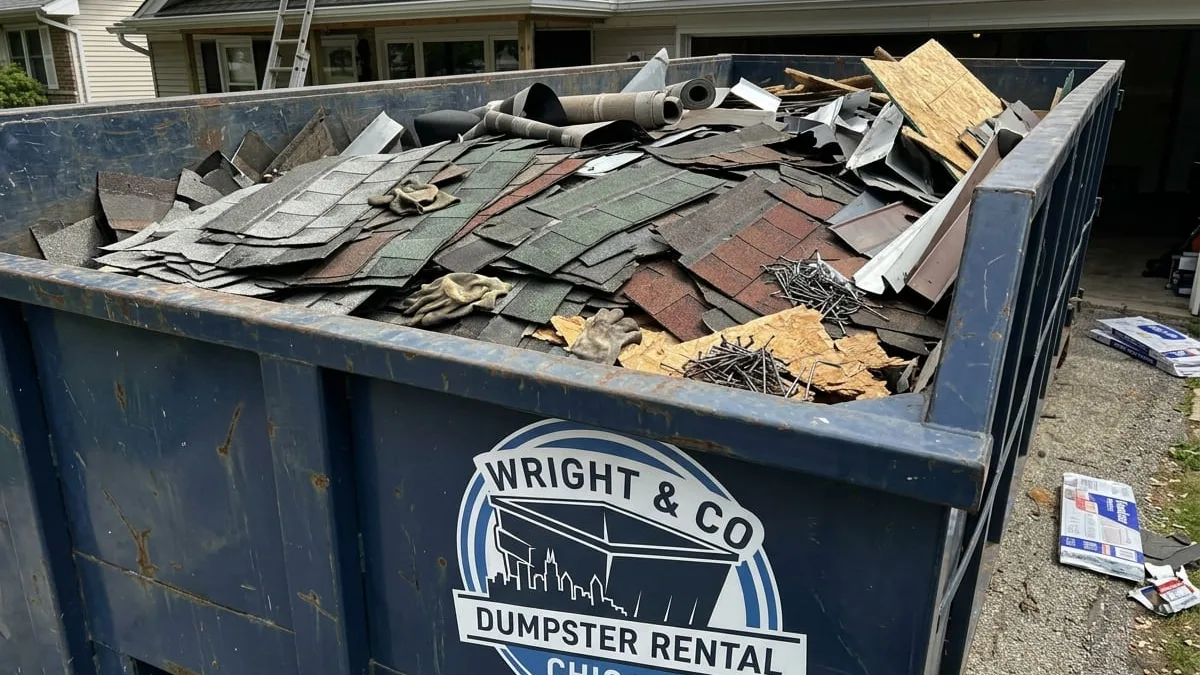
From spring hail and wind to genuine winter cold, Chicago's weather shapes storm cleanup timing more than people expect. Here's what to plan for.

A dumpster in winter isn't complicated, but a few extra steps protect your property and keep delivery smooth when the ground is frozen or snow-covered.
Recycling rules in the Chicago area come from a mix of city and state programs, with the city handling most of what residents actually deal with day to day.