
Winter Dumpster Placement Tips for Chicago Properties
A dumpster in winter isn't complicated, but a few extra steps protect your property and keep delivery smooth when the ground is frozen or snow-covered.
Chicago dumpster guide
From spring hail and wind to genuine winter cold, Chicago's weather shapes storm cleanup timing more than people expect. Here's what to plan for.
Chicago's weather swings hard across the year, and both ends of that swing affect storm cleanup and dumpster rental in real, practical ways. Spring brings the region's most active severe weather; winter brings sustained cold and real accumulating snow, occasionally intensified by lake-effect bands off Lake Michigan. Whether you're dealing with storm damage or just planning a cold-weather project, here's how the seasons actually factor in.
Roughly April through early summer is the Chicago area's peak window for severe thunderstorms, damaging straight-line wind, and hail. This is when most wind and hail-related roof damage, downed tree limbs, fence damage, and storm debris cleanup projects concentrate. It's also, unsurprisingly, when roofing crews, tree services and dumpster demand all spike together, so if a storm has damaged your property, getting a cleanup and repair timeline moving sooner rather than later tends to mean shorter waits across the board.
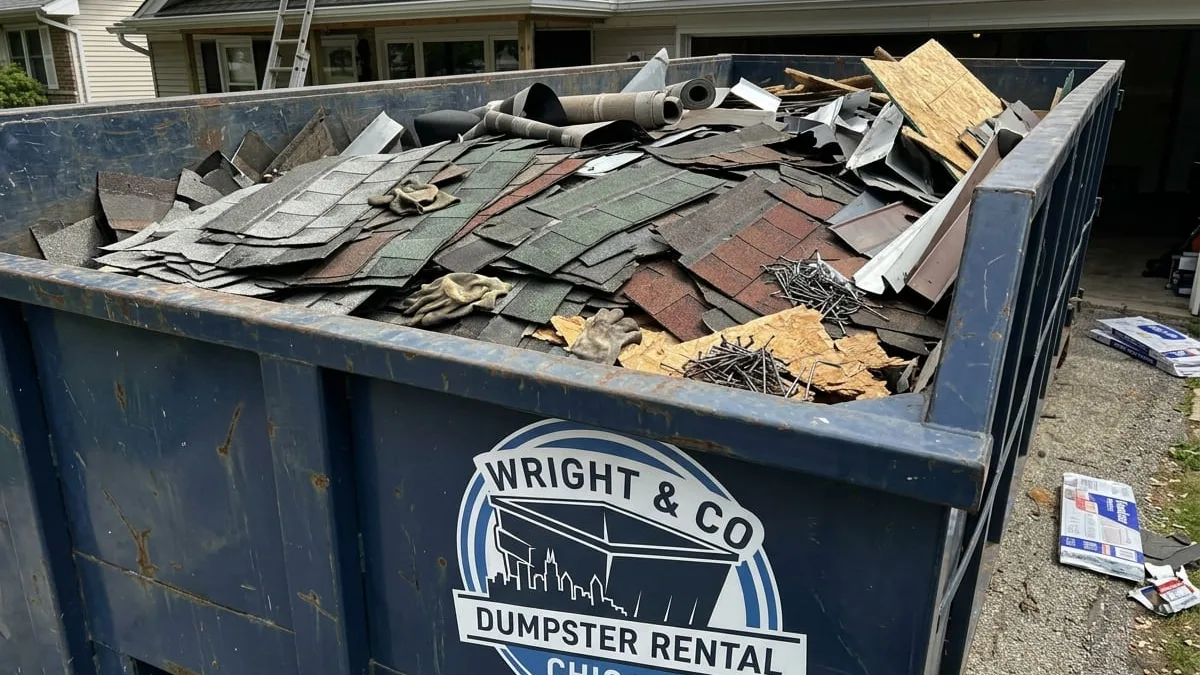
Storm-related debris tends to be a specific mix: downed tree limbs and brush, damaged fencing, torn-off roofing material, water-damaged drywall or flooring from a leak or flooding, and displaced siding or gutters. Tree and yard debris is bulky but relatively light for its volume, while roofing and water-damaged building material can be considerably heavier — our roofing dumpster guide covers shingle weight in detail if wind or hail damage means a full or partial tear-off is part of your cleanup. For yard and tree debris specifically, our yard waste service is often the more economical option than a full mixed-debris container.
If storm damage is likely to involve an insurance claim, it's worth photographing damage thoroughly before debris is cleared, and confirming with your insurer or adjuster what documentation they need before a dumpster shows up and material starts leaving the property. This is a step that's easy to skip in the rush to clean up, but much harder to fix after the fact once damaged material is gone. Once documentation is squared away, cleanup can move quickly. If an adjuster hasn't visited yet but debris is a genuine safety or access hazard — blocking a driveway, a downed limb across a walkway — it's reasonable to clear the immediate hazard while still photographing thoroughly beforehand; most insurers expect reasonable mitigation steps rather than a property left untouched for weeks awaiting inspection.
Storm damage doesn't wait for a convenient scheduling window, which is why we offer same-day dumpster rental for situations that can't wait — a tree through a fence, a roof leak that needs immediate tear-off and tarping, or storm debris that's blocking access to a driveway or garage. Call us directly at (312) 634-6846 for the fastest response on an urgent cleanup.
A significant storm often damages more than one property on a block at once — a line of trees along an alley, several roofs on the same street hit by the same hail cell. If you're a contractor, property manager, or just a neighbor coordinating cleanup across a few affected homes, it's worth reaching out early, since demand for dumpsters, roofers and tree services all spike together right after a major storm event. We work with contractors managing multiple storm-damaged properties at once and can coordinate deliveries across several addresses rather than booking each one separately from scratch.
Chicago winters aren't mild — there are genuine sustained stretches below freezing, real accumulating snowfall, and occasional lake-effect snow bands off Lake Michigan that can intensify snowfall totals in bands along and near the lakefront, distinct from the milder freeze-thaw pattern you'd see further south in Illinois. None of this stops dumpster delivery, but it does change a few practicalities. Snow and ice need to be cleared from the placement area before delivery so the container sits level and the truck can maneuver safely. Frozen ground can make some debris — especially yard waste or anything with moisture in it — heavier and harder to load. And during a declared snow emergency, containers cannot be placed on designated arterial streets, since those routes need to stay clear for plows; this only affects public-way placements, not driveway or yard placements. Our winter placement guide covers the practical side of cold-weather delivery and driveway protection in more depth.
Between spring storm season and winter cold, fall is generally the calmest window for weather-related cleanup work in Chicago — which makes it a good time for preventive projects like clearing gutters, removing dead or damaged tree limbs before winter storms can bring them down, and general yard cleanup ahead of the first freeze. Getting ahead of storm-prone trees and structures in the fall, when crews and scheduling have more flexibility, can reduce how much emergency cleanup is needed once spring storm season arrives.
The practical takeaway across both seasons: if a project is weather-dependent (roofing, exterior work, yard cleanup) and you have scheduling flexibility, spring's storm season and winter's coldest weeks are both worth planning around when possible — not because work can't happen then, but because both demand on crews and site conditions are tougher during those windows. If the situation is storm damage that's already happened, timing isn't optional, and that's exactly the kind of job our same-day service is built for. Whatever the season, we deliver across Chicago and the surrounding communities we serve, and we'll give you a straight answer on realistic timing for your specific situation when you call.
FAQs
Roughly April through June is the region's peak window for severe thunderstorms, hail and damaging wind, which is when most storm-related roof and tree damage concentrates.
Yes, we offer same-day dumpster rental for urgent situations like storm damage, downed trees, or debris blocking access to your property. Call (312) 634-6846 for the fastest response.
Yes, photograph the damage thoroughly and check with your insurer or adjuster about documentation needs before debris leaves the property. It's much easier to do this before cleanup than to try to reconstruct it afterward.
No, we deliver through the winter, but snow and ice need to be cleared from the placement area first, and containers can't be placed on designated arterial streets during a declared snow emergency. Driveway and yard placements aren't affected by snow emergency rules.
Yes, the Chicago area sees sustained freezing stretches, real accumulating snow, and occasional lake-effect snow bands off Lake Michigan that can add to totals near the lakefront, which is a heavier winter pattern than the milder freeze-thaw climate further south in the state.
Ready when you are
Call and you will speak to someone local who knows the streets, the alleys, the permit rules and which box actually fits your lot. Flat rate quoted up front.
Keep reading

A dumpster in winter isn't complicated, but a few extra steps protect your property and keep delivery smooth when the ground is frozen or snow-covered.
Recycling rules in the Chicago area come from a mix of city and state programs, with the city handling most of what residents actually deal with day to day.

Picking the wrong dumpster size costs you money either way — too small means a second haul, too big means paying for air. Here’s how to size it right the first time.