Chicago and Cook County Recycling Guide
Recycling rules in the Chicago area come from a mix of city and state programs, with the city handling most of what residents actually deal with day to day.
Chicago dumpster guide
A dumpster in winter isn't complicated, but a few extra steps protect your property and keep delivery smooth when the ground is frozen or snow-covered.
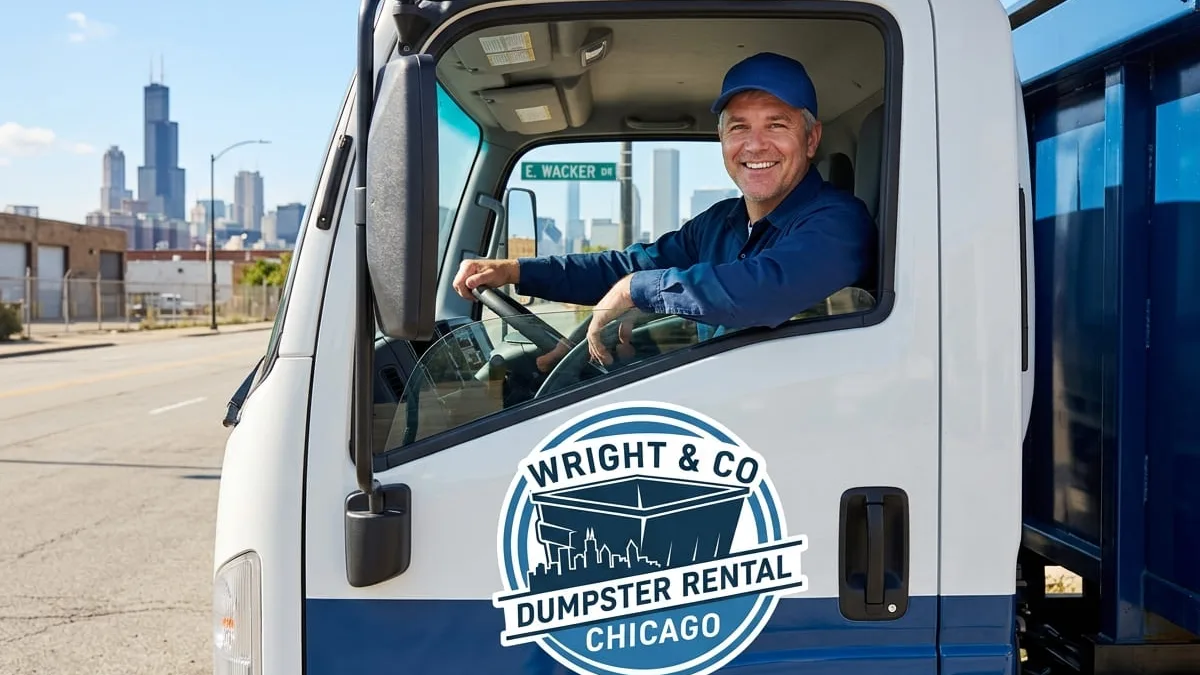
Renting a dumpster in a Chicago winter is routine for us — we deliver year-round — but cold weather does add a few practical considerations that don't come up in July. None of these should discourage a winter project; they just take a little extra planning to protect your property and make delivery day go smoothly.
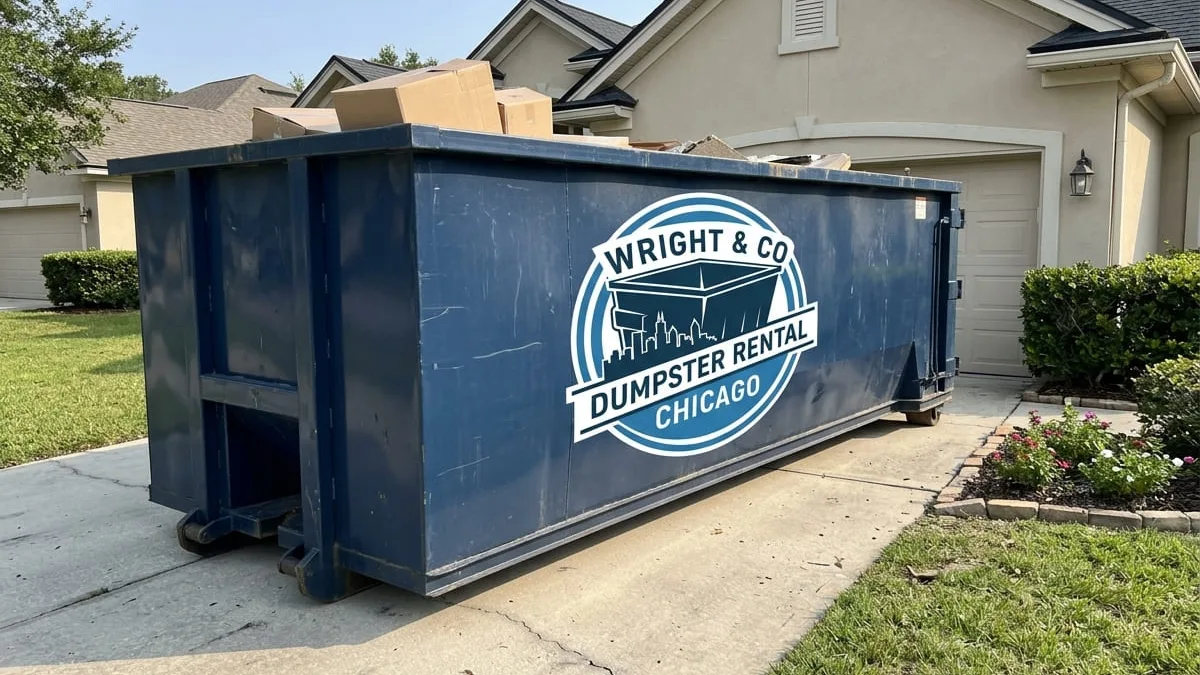
This matters in every season, but it matters more in winter. A loaded roll-off dumpster is heavy, and setting it directly on a driveway, especially an older concrete or asphalt driveway that's already stressed by freeze-thaw cycles, can leave marks or cracking. We place boards under every container to spread the weight and protect the surface underneath — this is standard practice for us regardless of season, but it's especially worth confirming in winter when driveway concrete is often more brittle from cold temperatures and any existing minor cracks are more likely to spread under a concentrated load. If your driveway has visible existing damage, mention it when you book so we can talk through placement options.
A clear, level placement area matters for safe delivery any time of year, but in winter it's worth actively clearing snow and ice from the spot before the truck arrives rather than assuming the delivery crew can work around it. A few inches of packed snow or a layer of ice under a delivery point can make it harder to place the container level and can create a slip hazard once you're loading it. If your driveway or yard hasn't been shoveled ahead of a scheduled delivery, let us know — we'd rather adjust timing than force a delivery onto an unsafe surface.
A lot of the Chicago homes we serve — particularly across the bungalow-belt neighborhoods on the West Side — are alley-loaded, with garage and yard access from the rear alley rather than the front street. Alleys narrow further in winter once plowed snow piles up along the edges, which can turn an already tight access point into a genuinely difficult one for a delivery truck to navigate. If your access is through an alley, it's worth checking that the route is passable — not just plowed, but wide enough for a loaded truck — before your scheduled delivery date, and letting us know if snow has narrowed the usable width. Note also that if the dumpster needs to sit in the alley itself rather than fully on your property, that's technically public way under Chicago's rules and needs a CDOT permit regardless of season — see our permit guide for the full explanation of the alley rule.
Material that's absorbed moisture and then frozen — wet yard waste, soaked insulation, damp cardboard — can weigh noticeably more than the same material would dry, which matters if your project is already close to a weight limit. This is worth keeping in mind for late-fall yard cleanups or any project involving materials that were exposed to the elements before loading. If you're doing an interior demo or remodel over the winter, this is less of a concern since that debris typically hasn't been sitting outside, but it's a real factor for any outdoor cleanup, storm debris removal, or a garage or shed clearing where items have been exposed to moisture for a while.
A container itself can develop a layer of ice on its surfaces after a snowfall or freezing rain, which is worth keeping in mind if you or a crew will be climbing partially into it to arrange debris. Basic precautions — solid footwear, taking it slow on an icy container edge, and not overloading one side in a way that could shift a partially frozen load — go a long way toward keeping a winter loading day safe. None of this is complicated, but it's worth a moment's thought that a summer rental doesn't require.
If your dumpster is on the public way under a CDOT permit rather than on private property, be aware that containers cannot be placed on designated arterial streets during a declared snow emergency, since those streets need to stay clear for plows. This restriction doesn't affect driveway, yard, or private-lot placements at all — it only applies to public-way placements, and it's one more reason private property placement is the simpler option whenever it's available.
Some homeowners hold off on renovations or cleanouts until spring, assuming winter adds too much friction to be worth it. For many projects, that's not actually the case. Interior work — a kitchen or bathroom remodel, a basement finish, an estate cleanout — is barely affected by outdoor conditions at all beyond the placement considerations above, and contractor and delivery scheduling is often more flexible in the winter months than during the busy spring and summer season when everyone in the city seems to be renovating at once. If your project is primarily indoor work, winter can actually be the easier season to get it done and get a dumpster delivered without a scheduling wait.
None of this should discourage a winter renovation, cleanout, or cleanup — we deliver and pick up through the coldest months of the year without issue. The short list that makes it smoothest: confirm your placement spot is cleared of snow and ice, let us know if there's any existing driveway damage, flag it if access is through a narrow or snow-narrowed alley, and mention if your debris is likely to include frozen or waterlogged material. Call us at (312) 634-6846 and we'll walk through the specifics of your property before delivery day.
FAQs
Yes, year-round, including through the coldest months. A few extra precautions apply — clearing snow and ice from the placement area and confirming alley access if that's your route — but winter itself doesn't stop delivery.
We place boards under every container to spread the weight and protect the surface, which matters even more in winter when concrete tends to be more brittle from cold temperatures. Flag any existing driveway damage when you book so we can plan placement accordingly.
It can narrow the usable path if snow has piled up along the alley edges. Check that the route is genuinely clear and wide enough before your delivery date, and let us know if it's tight. Also note that a dumpster sitting in the alley itself, rather than fully on your property, needs a CDOT permit under Chicago's public way rules.
Yes, material that's wet or frozen can weigh more than the same material dry, which is worth factoring in if your project is already near the weight limit for your container size.
No, containers on the public way can't be placed on designated arterial streets during a declared snow emergency. This only applies to street or alley placements under a city permit — driveway and yard placements aren't affected.
Ready when you are
Call and you will speak to someone local who knows the streets, the alleys, the permit rules and which box actually fits your lot. Flat rate quoted up front.
Keep reading
Recycling rules in the Chicago area come from a mix of city and state programs, with the city handling most of what residents actually deal with day to day.

Picking the wrong dumpster size costs you money either way — too small means a second haul, too big means paying for air. Here’s how to size it right the first time.

Dumpster pricing looks confusing from the outside, but it really comes down to a handful of factors. Here’s what moves the number up or down.