
What Can and Can’t Go in a Dumpster in Illinois
Most household and construction debris is fair game, but Illinois law draws hard lines around a few categories. Here's the complete breakdown.
Chicago dumpster guide
Dumpster pricing looks confusing from the outside, but it really comes down to a handful of factors. Here’s what moves the number up or down.

Every quote we give at Wright & Co Dumpster Rental is a flat rate — one number that covers delivery, the rental period, pickup, and disposal of an agreed weight of debris, so there’s no mystery invoice waiting at the end. But “flat rate” doesn’t mean every job costs the same, because the flat rate itself is built from a handful of real variables. Understanding them helps you get an accurate quote the first time and avoid add-on charges you didn’t expect.
The single biggest lever on price is which size you book. Moving from a 10 yard up to a 40 yard container steps the price up at each tier, roughly in line with the added capacity and the higher weight allowance bundled in. If you’re unsure which tier fits your project, our sizing guide walks through the common project-to-size pairings we see across the city. Sizing correctly the first time is usually the single biggest cost-control decision you’ll make, since a too-small box means paying for a second pickup and delivery.
Every rental includes a standard number of days on-site, which covers the vast majority of residential and small commercial projects. Need the container longer because a renovation is running behind schedule, or a contractor hasn’t started yet? Extended rental periods are available for an additional daily rate. Tell us up front if your timeline is uncertain — it’s easier to build in flexibility from the start than to negotiate an extension after the fact.
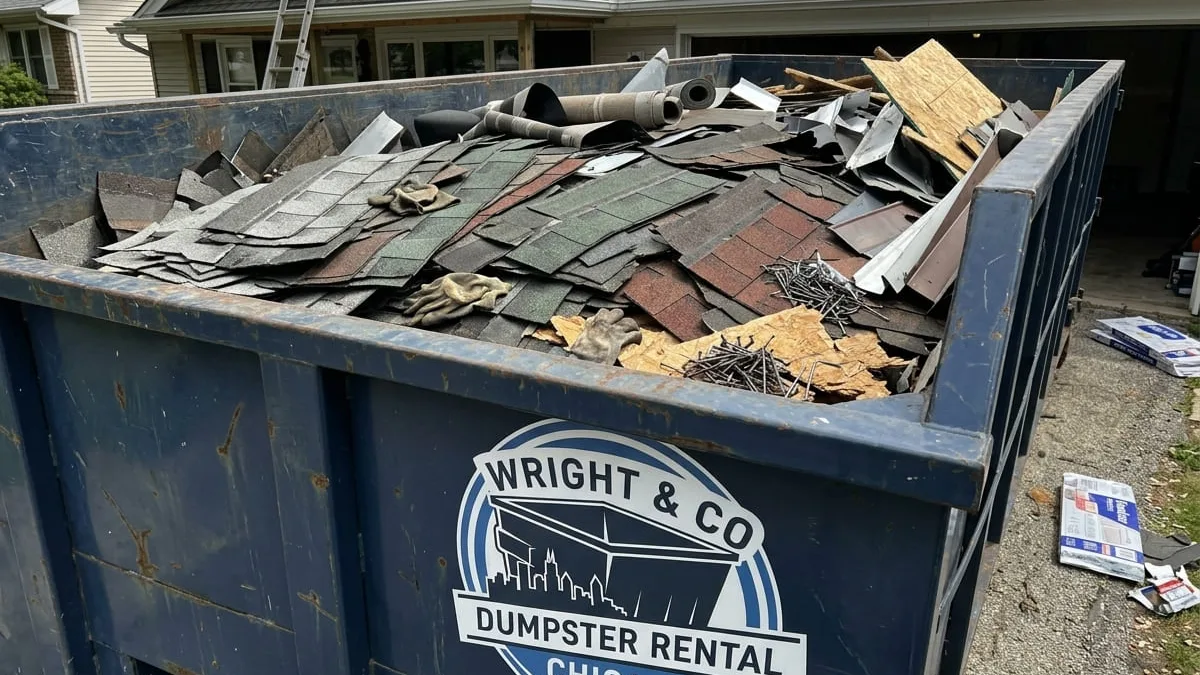
Each size comes with an included weight allowance, and material beyond that allowance is billed per ton at pickup. This is where debris type matters more than people expect. A dumpster full of furniture, boxes and general household junk is light for its volume. The same size dumpster full of roofing shingles, plaster and lath, tile, or construction debris can be dramatically heavier for the same volume — sometimes heavy enough to hit the weight limit well before the box looks full. If you know your project involves dense material, ask about the included tonnage on the size you’re booking so there are no surprises.
Standard mixed household and construction debris is priced into the flat rate. Certain materials cost more to process and dispose of — items like mattresses, tires, appliances with refrigerant, or heavy inert material such as concrete, brick and dirt, which often need to be quoted and hauled separately rather than mixed into a general debris load. Prohibited items — hazardous waste, certain electronics under Illinois law, and asbestos among them — can’t go in a dumpster at all regardless of price; see our full guide to what can and can’t go in a dumpster in Illinois before you load anything questionable.
This one surprises a lot of first-time renters. If a dumpster can sit entirely on your own property — a driveway, a yard, a private parking pad — there is no permit and no added fee, full stop, anywhere in Chicago or its suburbs. But if there’s nowhere on your lot to put it and the container needs to sit on the public way — a street, a sidewalk, or (importantly, in Chicago) an alley — the city requires a dumpster permit from the Chicago Department of Transportation. Those permit fees are a separate cost from your dumpster rental, are paid to the city rather than to us, and vary depending on container size and how many days the permit covers. Our full CDOT permit guide breaks down the fee tiers and the alley rule in detail, because it catches a lot of alley-loaded bungalow and two-flat owners off guard. When you book with us, we’ll tell you honestly whether your placement looks like it needs a permit before delivery day.
Where you're located within our service area and how easily a truck can access the placement spot can factor into the total price as well. A straightforward driveway drop-off on a wide residential street is about as simple as delivery gets. A tight urban lot, a narrow alley approach, or a location that needs careful maneuvering around parked cars can take more time and coordination, and in rare cases affects what size container can even be delivered to a given spot. This is generally a minor factor compared to size, weight and rental period, but it's part of why we ask for your address and a description of the placement area when you request a quote rather than pricing purely off a size chart.
When you're comparing dumpster rental quotes around Chicago, the lowest number on paper isn't always the best deal once you look closer. A quote that looks unusually cheap sometimes reflects a smaller included weight allowance, a shorter rental period, or delivery and pickup fees added separately rather than bundled in. Ask directly what's included: how many tons of debris, how many days, and whether delivery and pickup are part of the number or billed on top. A slightly higher quote that includes a realistic weight allowance for your project is often the better value than a lower number that turns into overage fees the moment the container is half full.
The fastest way to get a number that actually holds is to give us a few honest details up front: the general project type (cleanout, remodel, roofing, demolition), the approximate volume or square footage, the age and construction of the building if it’s a renovation, roughly how long you’ll need the container, and where on the property it will sit. With that, we can quote a flat rate that already accounts for size, weight allowance and rental period, and flag early if your placement is going to require a city permit. Call us at (312) 634-6846 and we’ll walk through it with you directly rather than making you guess from a size chart alone.
FAQs
Yes for the core rental — delivery, the standard rental period, pickup and disposal up to the included weight are all one price. Costs beyond that flat rate come from going over the weight allowance, keeping the container longer than the standard period, certain restricted materials, or a city permit fee if the container has to sit on the public way.
General household and construction debris is covered in the standard rate. Heavier material like concrete, brick, tile, or plaster can push you toward the weight limit faster, and a few specific items (mattresses, tires, appliances) are typically priced separately. Tell us what you're disposing of and we'll quote it accurately.
No. If the dumpster sits entirely on private property — your driveway, yard, or a parking pad — there's no permit and no fee anywhere in the city or suburbs. A permit is only required when the container has to be placed on the public way, which in Chicago includes streets, sidewalks and alleys.
CDOT publishes fee tiers based on container size (Class A for 30 cubic yards or less, Class B for larger) and permit duration, roughly in the range of $50 to $200 depending on the tier, with fees doubled inside the Central Business District. These are approximate figures from CDOT's published schedule and can change, so confirm current fees directly with the city before budgeting. See our full permit guide for details.
Not usually — the standard rental period included in the flat rate is sized to fit most projects, and extending beyond it adds a daily rate rather than lowering the base cost. The bigger cost-saving move is usually getting the size right the first time so you don't need a second delivery.
Ready when you are
Call and you will speak to someone local who knows the streets, the alleys, the permit rules and which box actually fits your lot. Flat rate quoted up front.
Keep reading

Most household and construction debris is fair game, but Illinois law draws hard lines around a few categories. Here's the complete breakdown.
Chicago's dumpster permit rules trip up more homeowners than any other part of the process — especially the alley rule. Here's the complete, accurate breakdown.

Chicago jobsites generate a steady stream of debris, and the city has a specific recycling requirement contractors need to know about. Here's how it works.