
Chicago Dumpster Permit Guide: What CDOT Actually Requires
Chicago's dumpster permit rules trip up more homeowners than any other part of the process — especially the alley rule. Here's the complete, accurate breakdown.
Chicago dumpster guide
Most household and construction debris is fair game, but Illinois law draws hard lines around a few categories. Here's the complete breakdown.

A roll-off dumpster is built to take the bulk of what a renovation, cleanout or construction project produces, and for the vast majority of projects across Illinois that's exactly how it works — load it up and we haul it away. But a handful of material categories are restricted or banned outright, some by state law and some by the landfills and transfer stations that ultimately receive the debris. This guide covers what's allowed, what's restricted, and what needs a different disposal path entirely, whether you're renting in Chicago or anywhere else in the state.
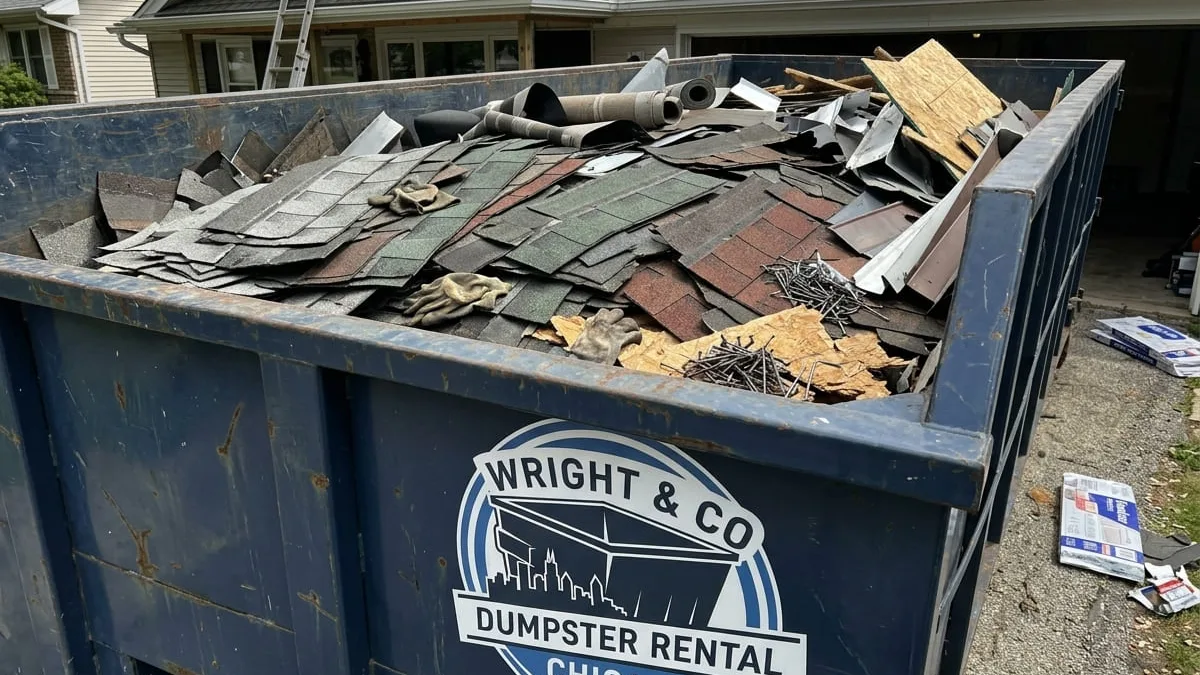
The large majority of what goes into a residential or construction dumpster is unrestricted: general household junk, furniture, boxes, clothing and linens, carpet and padding, wood and lumber scraps, drywall, flooring, cabinetry, non-hazardous construction and demolition debris, roofing shingles, yard waste and brush, and non-refrigerant appliances. This is the material stream a standard residential dumpster rental or construction dumpster rental is built around, and it's what makes up nearly every load we haul.
This is one of the most commonly missed restrictions, and it applies statewide, not just in Chicago. The Illinois Electronic Products Recycling and Reuse Act (415 ILCS 150) prohibits TVs, computer monitors, computers, printers and a range of other electronic devices from being disposed of in the regular waste stream, including in a dumpster headed to a landfill. These items have to be taken to a certified electronics recycler instead. This isn't a preference or a courtesy — it's Illinois state law, and it exists because of the metals and components in e-waste that shouldn't end up in a landfill. If you're clearing out an office, an estate, or an old media cabinet full of electronics, set those items aside for a certified recycler rather than tossing them in with everything else.
Asbestos-containing material cannot go in a roll-off dumpster under any circumstances, and this is genuinely relevant across Illinois given how much of the state's older housing stock — Chicago's two-flats, bungalows and greystones very much included — was built before asbestos use was phased out around 1978. Old pipe insulation, certain floor tile and mastic, popcorn ceiling texture, and some older roofing and siding materials can contain asbestos. If a demolition or renovation project involves disturbing any of these in a pre-1978 building, the material needs to be assessed and, if confirmed, removed by a licensed asbestos abatement specialist through a regulated process — not tossed in a dumpster and not something a general contractor should handle informally. When in doubt on an older building, get it tested before demo starts.
Beyond electronics and asbestos, a standard dumpster cannot take: paints, solvents and thinners; motor oil, gasoline and other fuels; propane tanks and other pressurized cylinders; pesticides and herbicides; car batteries and other batteries containing hazardous chemicals; medical or biohazard waste; and any material the EPA classifies as hazardous waste. Most of these have a dedicated disposal path — household hazardous waste collection events, auto parts stores that take batteries and oil, or a licensed hazardous waste hauler for larger quantities. Refrigerators, freezers and air conditioners containing refrigerant also need special handling because of the refrigerant recovery requirement, so let us know in advance if your load includes any of these so we can advise on the right process.
A few categories aren't banned but are handled differently because of weight or processing: tires, mattresses and box springs, and large quantities of concrete, brick, block or dirt. These typically carry a separate line-item cost rather than being folded into a general debris load, largely because of how they're processed downstream. If your project includes any of these, mention it when you book so it's reflected in your quote rather than showing up as a surprise at pickup. Heavy inert debris like concrete is often better suited to a dedicated concrete and heavy debris container than a general mixed dumpster.
It's worth understanding the reasoning, because it makes the rules easier to remember. Electronics are restricted because of the metals, circuit boards and occasionally hazardous components inside them that don't belong in a landfill and can be recovered through proper recycling. Asbestos is restricted because disturbing it in an uncontrolled way — exactly what happens when it's broken up and thrown in a dumpster — releases fibers that pose a serious long-term health risk to anyone nearby, including the crews who load and haul the material. Hazardous chemicals are restricted because a landfill isn't built to contain what those substances can do to soil and groundwater over time. None of these rules exist to make disposal harder for the sake of it; they exist because the standard debris stream genuinely isn't equipped to handle these materials safely.
If you're staring at something and not sure which category it falls into, the safest move is to call us before it goes in the box. Sorting an item out after a dumpster is full and picked up is far more disruptive — and can hold up your pickup or trigger a rejected load — than a two-minute question ahead of time. This is especially true for anyone tackling a full estate cleanout, where decades of accumulated household items can include old paint cans, chemicals, or electronics tucked away in a basement or garage that easily get missed in the rush to clear a house. It also matters for anyone handling a demolition or renovation project in an older building, where the line between ordinary debris and something that needs special handling can be less obvious than it looks. When in doubt, a quick phone call to our team at (312) 634-6846 before loading is always the safer move.
FAQs
No. Under the Illinois Electronic Products Recycling and Reuse Act, TVs, computer monitors, computers and several other electronics are banned from regular disposal statewide and must go to a certified electronics recycler instead.
Stop and don't put it in the dumpster. Asbestos-containing material has to be handled by a licensed abatement specialist through a regulated removal process. This comes up often in Chicago's pre-1978 housing stock, so it's worth testing suspect material before demo begins on an older building.
Yes, mattresses are generally allowed, but they're often priced separately from general debris because of how they're processed. Mention it when booking so it's reflected in your quote.
Wet or liquid paint is treated as hazardous waste and isn't allowed. Fully dried-out latex paint (with the lid off and contents solid) is sometimes acceptable, but the safest approach is to check with us first or take liquid paint to a household hazardous waste collection event.
The core prohibitions — electronics under state law, asbestos, and hazardous waste — apply statewide. What differs city to city or county to county is the permitting process for where a dumpster can physically sit, which is a separate issue from what's allowed inside it.
Ready when you are
Call and you will speak to someone local who knows the streets, the alleys, the permit rules and which box actually fits your lot. Flat rate quoted up front.
Keep reading
Chicago's dumpster permit rules trip up more homeowners than any other part of the process — especially the alley rule. Here's the complete, accurate breakdown.

Chicago jobsites generate a steady stream of debris, and the city has a specific recycling requirement contractors need to know about. Here's how it works.

Clearing out a family home is rarely just a logistics project. This checklist is built to make the practical side easier so you can focus on everything else.